


Curated 4K/HD animation reference, by category.
Each row links the movie title to an official trailer, and the
director name to more background on their work. The final columns give you a
quick story beat plus a specific visual highlight that earns its place on this list.
Fully 3D Feature films created entirely in computer-generated imagery, with no live-action footage. These stories live in worlds that only exist inside the computer, where every prop, costume, and beam of light is designed and animated by hand or code. Directors can stage impossible camera moves, push scale to the extreme, and treat physics as either a strict rule or a playful suggestion.
Stylized 3D 3D-animated films that lean into graphic, illustrative rules – painterly, comic, or otherwise non-photoreal. Instead of chasing realism, they embrace bold shapes, simplified lighting, and expressive textures that feel like moving illustration. This category often plays with frame rates, linework, and color palettes to create a signature “drawn” or graphic look that stands apart from standard CG.
Photoreal CG or VFX-driven Movies where characters and environments are meant to look indistinguishable from live-action. Here the goal is invisible magic: digital creatures, crowds, worlds, and effects that blend seamlessly with what was shot on set. These projects rely on high-end simulation, lighting, and compositing so audiences forget they’re looking at pixels at all.
Hybrid Live-Action + Animation Films where animated characters share the frame with live-action sets. Animation is layered into plates shot on real locations or soundstages, letting drawn or CG performers interact with human actors, practical props, and real-world lighting. The charm comes from that collision of mediums: fantasy beings grounded in recognizable, physical space.
INTERACTIVE: Favorite Animated Movies
Rate & surface the crowd favorites
Use the tables below to rate the reference movies on this page and call out your own top three
animated-based films. These ratings are designed to plug into a real-time graph so you can see
how your tastes line up with everyone else.
Interactive Score Card
1.
Top movie placeholder – waiting on user ratings.
2.
Second favorite placeholder.
3.
Third favorite placeholder.
4.
Fourth favorite placeholder.
5.
Fifth favorite placeholder.
Your Top 3 Animated-Based Movies
| Rank | Movie title | Why it hits for you |
|---|---|---|
| 1 | ||
| 2 | ||
| 3 |
Interactive Score Card of Top 3
1.
Top pick placeholder – most selected favorite.
2.
Second pick placeholder.
3.
Third pick placeholder.
Fully 3D
Feature films built entirely in CG
Classic and modern CG features where the whole world is digitally animated – great for studying staging,
lighting, and character performance in a fully synthetic space.
| Movie | Director (+ link) |
Studio | Animation director / key leads | Movie summary | Visual highlight / reason it’s here |
|---|---|---|---|---|---|
| Josh Cooley | Pixar Animation Studios / Walt Disney Pictures | Supervising animators Scott Clark, Robert H. Russ and the Pixar character animation team. | Woody, Buzz and the rest of the toys hit the road on a carnival trip with Bonnie and her new creation Forky. A chance reunion with Bo Peep forces Woody to reconsider what “being there for a kid” really means. |
Highlight
The nighttime carnival rescue sequence, with toys swinging through neon-lit rides and fireworks,
shows off Pixar’s control of complex crowds, light, and camera motion.
Look at the depth-of-field, tiny texture details in the antique store, and the subtle acting on
Gabby Gabby.
|
|
| Ron Clements, John Musker | Walt Disney Animation Studios | Heads of animation Hyrum Osmond & Amy Smeed, working with Disney’s water/cloth simulation teams. | Chosen by the ocean, Moana sails beyond the reef to restore the heart of Te Fiti and save her island from ecological collapse, teaming up with demi-god Maui along the way. |
Highlight
The “How Far I’ll Go” sequences, where the ocean lifts and curls as a character, are a masterclass
in stylized yet physically rich water animation.
Study the interaction between Moana’s hair, clothing, spray, and the translucent wave volumes.
|
|
| Dean DeBlois | DreamWorks Animation | Head of animation Simon Otto and DreamWorks’ dragon-flight / crowd teams. | As Berk overflows with rescued dragons, Hiccup dreams of relocating everyone to the legendary Hidden World while a ruthless dragon hunter, Grimmel, targets Toothless. |
Highlight
The first reveal of the Hidden World — bioluminescent caverns filled with glowing dragons and
waterfalls — layers complex lighting, fog and effects without losing readability.
Also note Toothless and Light Fury’s courtship flight for nuanced creature acting with minimal dialogue.
|
|
| Jennifer Lee, Chris Buck | Walt Disney Animation Studios | Heads of animation Tony Smeed & Becky Bresee; advanced effects teams for water, smoke, and elemental spirits. | Elsa hears a mysterious voice calling her north and travels with Anna and friends to an enchanted forest to uncover the truth about their family, Arendelle, and the origin of her powers. |
Highlight
Elsa’s battle with the ocean and the water spirit Nokk combines huge FX sims with tiny character
beats as she literally freezes waves under her feet.
Look at the volumetric mist in the forest, the fire spirit Bruni, and the crystalline memory motifs.
|
|
| Jennifer Yuh Nelson, Alessandro Carloni | DreamWorks Animation / Oriental DreamWorks | Head of character animation Kurt Wang and martial-arts choreography/pose design teams. | Po meets his biological father and discovers a hidden panda village, then must train the pandas to fight the spirit warrior Kai who steals chi from masters. |
Highlight
The spirit realm battles with glowing jade chi and ink-brush energy trails push stylization while
staying physically grounded in kung-fu motion.
Check the graphic 2D-inspired sequences that bookend the film for layout/shape language studies.
|
Stylized 3D
3D with bold, graphic visual rules
Hybrid looks that lean into hand-crafted lines, stepped animation, and strong design language – ideal for
reference when you want CG to feel illustrative or hand-drawn.
| Movie | Director (+ link) |
Studio | Animation director / key leads | Movie summary | Visual highlight / reason it’s here |
|---|---|---|---|---|---|
| Bob Persichetti, Peter Ramsey, Rodney Rothman | Sony Pictures Animation | Head of character animation Josh Beveridge and the Spider-Verse look-development team (comic halftones, line-work, onomatopoeia). | Teenager Miles Morales becomes the new Spider-Man and meets alternate Spider-heroes from other dimensions as they team up to stop Kingpin’s collider from destroying the multiverse. |
Highlight
The “Leap of Faith” shot where Miles falls upward against an inverted city skyline shows the
film’s comic-panel framing, exaggerated perspective, and stepped CG animation.
Study how smear frames, speed lines, halftones and color separation are layered over 3D animation.
|
|
| Joel Crawford, Januel Mercado | DreamWorks Animation | DreamWorks character animation and effects teams using stepped poses, painterly backgrounds, and stylized motion blur. | After burning through eight of his nine lives, Puss races across the Black Forest to find the Wishing Star, pursued by bounty hunters and fairy-tale villains who want the same wish. |
Highlight
Puss versus the Wolf fights, where the frame rate drops and brush-stroke effects kick in, are a
great reference for mixing graphic action with expressive character animation.
Notice the painted depth cues and selective detail that keep action clear even in complex staging.
|
|
| Mike Rianda | Sony Pictures Animation | Sony’s “cartoon-shader” pipeline team continuing Spider-Verse’s mixed-media approach with hand-drawn embellishments over 3D. | A quirky, dysfunctional family on a cross-country road trip accidentally becomes humanity’s final hope when a smart-device company’s A.I. triggers a robot apocalypse. |
Highlight
The mall Furby battle floods the frame with neon, hand-drawn doodles, text overlays, and extreme
camera moves while remaining readable and funny.
Great study for integrating 2D “thoughts and memes” into 3D character performance.
|
|
| Steve Martino | Blue Sky Studios | Blue Sky’s animation team translating Charles Schulz’s flat line art into dimensional characters while preserving on-model expressions. | Charlie Brown tries to reinvent himself to impress the Little Red-Haired Girl, while Snoopy imagines himself as a World War I flying ace battling the Red Baron. |
Highlight
Snoopy’s aerial dogfights retain Schulz’s sketchy line language while moving in full 3D through
painterly skies and clouds.
Watch how they snap between 2D “face stickers” and volumetric shading without breaking appeal.
|
|
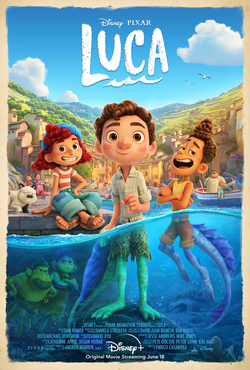
| Enrico Casarosa | Pixar Animation Studios | Pixar character animation and shading teams aiming for a soft, graphic, almost stop-motion feel in hair, eyes and silhouettes. | Two young sea monsters, Luca and Alberto, take human form to explore a sun-drenched Italian seaside town and dream of a life beyond the water, hiding their true nature. |
Highlight
The transformation beats where falling water flicks across skin and reveals or hides their sea-monster
forms are clean, readable, and emotionally timed.
Also note the simplified facial rigs and squash/shape-driven acting for a “toy-like” charm.
|
Photoreal
CG that aims to look live-action
Heavy VFX and performance-capture films where CG characters and environments are meant to be indistinguishable
from live-action plates – great reference for shot design and subtle acting.
| Movie | Director (+ link) |
Studio | Animation director / key leads | Movie summary | Visual highlight / reason it’s here |
|---|---|---|---|---|---|
| James Cameron | Lightstorm Entertainment / 20th Century Fox | Animation / VFX supervision by Richard Baneham and Weta Digital’s performance-capture teams. | Paralyzed Marine Jake Sully inhabits a bio-engineered Na’vi avatar on the alien world Pandora, falls in love with the planet and its people, and must choose sides when humans move to exploit it. |
Highlight
Banshee flights through floating mountains showcase early large-scale virtual cinematography, dense
foliage, and physically based lighting in a fully CG world.
Focus on facial capture for Neytiri and the translucency / subsurface scattering on blue skin.
|
|
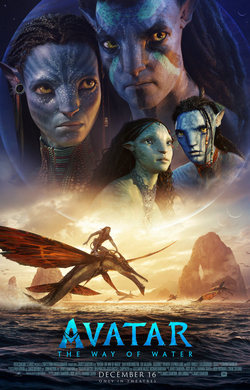
| James Cameron | Lightstorm Entertainment / 20th Century Studios | Senior animation supervisor Daniel Barrett and Weta FX’s underwater performance-capture / water-sim teams. | Years after the first film, Jake and Neytiri raise a family on Pandora but are forced to seek refuge with the oceanic Metkayina clan when human invaders return. |
Highlight
The underwater bonding scenes with the tulkun combine complex caustics, refraction, hair sims and
micro-expressions on fully CG characters.
The film is a go-to reference for water rendering, underwater motion, and multi-character performance capture.
|
|
| Jon Favreau | Walt Disney Pictures | VFX supervision by Rob Legato; animation supervision by Andrew R. Jones and MPC / Weta creature teams. | In a mostly virtual jungle, man-cub Mowgli is raised by wolves, hunted by tiger Shere Khan, and guided by Bagheera and Baloo toward a choice between animal and human worlds. |
Highlight
Kaa’s hypnotic encounter and Shere Khan’s scenes by the fire are great examples of realistic fur,
eye shading, and interaction with a live-action child.
Strong reference for virtual production and matching CG lighting to a single live-action performer.
|
|
| Jon Favreau | Walt Disney Pictures | Rob Legato and MPC’s animation/VFX crews using game-engine style virtual production and photoreal creatures. | A shot-for-shot re-imagining of the 1994 classic with a fully CG cast of animals and landscapes, telling Simba’s journey from cub to king of the Pride Lands. |
Highlight
The “Circle of Life” opening, framed like wildlife cinematography, is essential reference for
nature lighting, fur rendering and camera choreography.
Check how subtle facial motion is balanced with realistic animal anatomy.
|
|
| Matt Reeves | 20th Century Fox / Chernin Entertainment | Weta Digital, with animation supervision by Daniel Barrett and advanced facial-capture workflows for Caesar and his tribe. | Caesar leads the apes in a final confrontation with a ruthless human colonel while confronting his own capacity for vengeance in a snowy, war-torn world. |
Highlight
The snowy prison-camp sequences focus heavily on close-up facial acting: tiny twitches and eye darts
selling fully digital apes as living, thinking characters.
Excellent study for subtle performance capture and integrating CG characters into harsh, practical environments.
|
Hybrid Live-Action + Animation
Mixing real cameras and animated worlds
Films where actors and physical sets interact with animated characters or worlds — from hand-drawn composited
into plates to CG creatures sharing the frame with live performers.
| Movie | Director (+ link) |
Studio | Animation director / key leads | Movie summary | Visual highlight / reason it’s here |
|---|---|---|---|---|---|
| Robert Zemeckis | Touchstone Pictures / Amblin Entertainment | Animation director Richard Williams leading a large team of hand-drawn animators composited into practical sets. | In a noir 1940s Hollywood where cartoons and humans co-exist, hard-boiled detective Eddie Valiant is hired to clear toon star Roger Rabbit of a murder he didn’t commit. |
Highlight
The Ink & Paint Club sequence, where Jessica Rabbit sings on stage, perfectly sells 2D characters
casting shadows, grabbing props, and sharing eye-lines with live actors.
Still one of the best references for hand-drawn animation integrated into moving, lit live-action footage.
|
|
| Joe Pytka | Warner Bros. | Animation director Tony Cervone and Warner Bros. classic-character teams handling Bugs, Daffy and the Looney Tunes cast. | Aliens steal the talent of NBA superstars; Michael Jordan is recruited by Bugs Bunny and the Looney Tunes to play a high-stakes basketball game for their freedom. |
Highlight
The final game crams dozens of animated characters into a fully lit, moving live-action arena with
complex camera moves and crowd animation.
Great study for matching hand-drawn shadows and perspective onto dynamic plates.
|
|
| Paul King | StudioCanal / Heyday Films | Animation supervisor Pablo Grillo and Framestore teams animating Paddington into richly textured sets. | Paddington is wrongly imprisoned after being framed for the theft of a valuable pop-up book, and the Brown family race to clear his name while he charms everyone in prison. |
Highlight
The pop-up book fantasy sequence, where the camera “walks” through paper-cut London with Paddington,
blends miniature-style design with precise character animation.
Every shot is a lesson in integrating a fuzzy CG character with real props, fabrics and lighting.
|
|
| Rob Letterman | Legendary Pictures / Warner Bros. | MPC’s creature / animation teams making Pokémon read as tactile, furry, and grounded in Ryme City’s neon world. | Tim teams up with his missing father’s former partner, a wise-cracking Pikachu only he can understand, to uncover a conspiracy inside Ryme City’s human-Pokémon coexistence. |
Highlight
The Mr. Mime interrogation and the street-level city shots pack the frame with Pokémon whose scales,
fur and materials all respond believably to real lighting.
Strong reference for mixing stylized creature design with realistic surfacing.
|
|
| Rob Marshall | Walt Disney Pictures | Disney’s 2D animation artists and VFX teams combining traditional animation with digital compositing and CG. | In Depression-era London, a grown-up Michael Banks and his family face losing their home until Mary Poppins returns, whisking the children into magical adventures that restore their hope. |
Highlight
The “Royal Doulton Bowl” sequence drops the characters into a hand-painted animated world with
dancing animals, blending live-action performances with 2D animation and CG camera moves.
Great for studying how modern compositing revisits classic Mary Poppins techniques.
|
Note: The “Animation director / key leads” column sometimes lists specific
heads of animation or animation supervisors, and in other cases refers to the broader
character-animation / VFX teams, depending on how roles are credited for that production.